


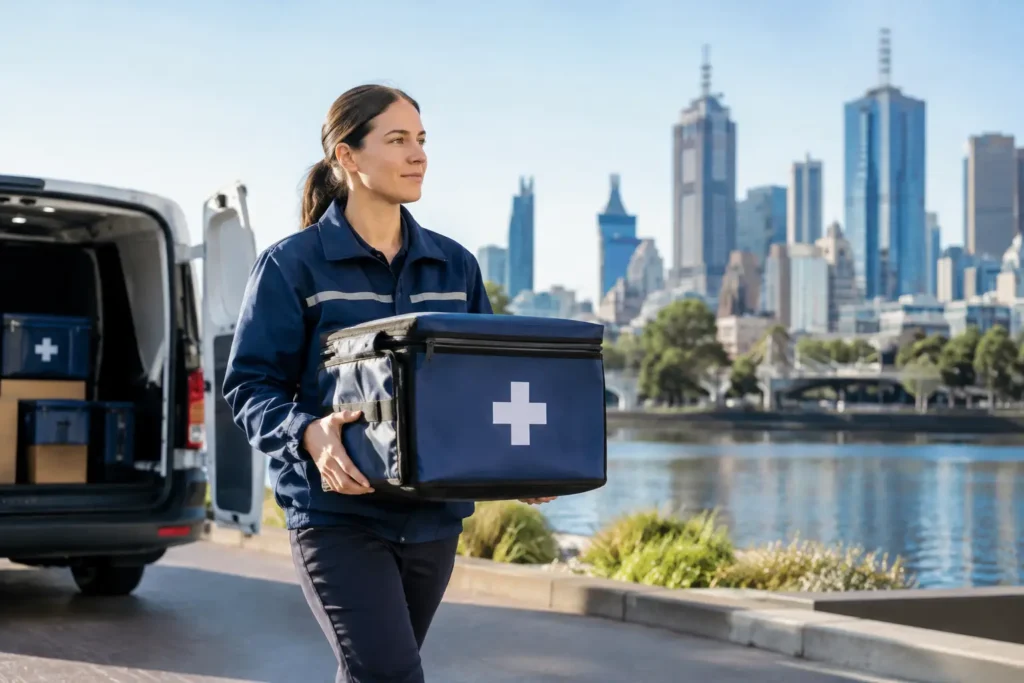
When a pharmacy order, medical device, sealed specimen or essential supply needs to move across town, ordinary parcel transport may not be the right answer. Medical delivery requires clear instructions, punctual collection and professional handling from pickup through to proof of handover. For clinics, pharmacies, aged care providers, businesses and families, delays can create far more than inconvenience.
A dependable transport service gives urgent items a direct path from sender to recipient. That means a booked vehicle, a professional driver, realistic collection times and communication when the job is complete. Across Melbourne, this level of care matters whether the delivery is travelling from a clinic in Richmond to a residential address, or from a supplier to a regional destination.
What Medical Delivery Means in Practice
Medical delivery is the point-to-point transport of approved medical-related items. It can include prescription medicines in sealed packaging, pharmacy orders, medical equipment, mobility aids, documents, laboratory specimens prepared for transport, and supplies needed by a health service or patient.
The service is not the same as clinical care. A transport driver does not provide medical advice, assess a patient, dispense medication or make decisions about treatment. Their role is to collect the correctly packaged item, follow the agreed delivery instructions and deliver it promptly to the nominated person or location.
That distinction is useful because every item has different requirements. A sealed pharmacy bag may need a direct delivery and a signature. A temperature-sensitive item may require specialist packaging and a vehicle or service specifically equipped to maintain the required temperature. Some regulated substances, dangerous goods and biological materials have handling rules that go beyond standard courier transport. The right service depends on the item, its packaging, the urgency and any compliance obligations attached to it.
Why Timing Is Central to Medical Delivery
A standard delivery run often groups parcels together and follows a broad route. This can work well for non-urgent freight, but it is not always suitable for medical items that need to arrive within a particular window. Direct medical delivery reduces unnecessary stops and gives the sender greater certainty about when collection and drop-off will occur.
Timing can matter for several reasons. A patient may be waiting for a medication that supports their treatment plan. A clinic may need supplies before the next appointment. A care facility may require an urgent replacement item. A business may need confidential documents or medical equipment transferred between locations before close of business.
The most efficient option is not always the cheapest on paper. If an item is time-critical, a dedicated taxi or vehicle can be better value than a delayed parcel service, particularly when a missed delivery creates extra staff time, rescheduling or concern for the recipient. For planned work, pre-booking helps secure a suitable collection time and gives everyone a clear expectation from the outset.
The Information That Makes a Delivery Run Smoothly
Clear booking details help the driver complete the job without avoidable delays. At the time of booking, provide the collection address, recipient address, contact names and mobile numbers, the preferred collection time and any required delivery deadline. Include practical access details, such as a loading bay, reception desk, hospital entrance, apartment level or gate code where appropriate.
It also helps to describe the item accurately without sharing more personal health information than necessary. For example, advise whether it is a small sealed pharmacy package, a boxed piece of equipment or several cartons of supplies. This allows the transport provider to allocate an appropriate vehicle and ensure there is enough space for the item to travel safely.
For high-priority jobs, agree on who can accept the delivery. If a signature is needed, nominate the authorised recipient and provide a backup contact. A driver arriving at an unattended address can lose valuable time trying to establish where the item should be left. Medical items should not be left in an unsuitable location simply because nobody answers the door.
Packaging, Privacy and Safe Handover
Professional transport starts before the vehicle arrives. The sender is responsible for ensuring an item is safely and securely packaged for the journey, with clear recipient details and any handling instructions that are appropriate for the driver to follow. A package should be closed properly, protected from damage and prepared for normal road movement.
Privacy also deserves attention. Medical deliveries can involve sensitive information, so labels should contain only what is necessary to reach the correct recipient. Avoid displaying unnecessary clinical details on the outside of a package. Where documents or medications are involved, a direct handover to the named recipient or authorised staff member is often the most suitable approach.
For larger or more delicate items, tell the provider before booking. A sedan may be ideal for an urgent envelope or small pharmacy bag, while a wagon, SUV or maxi cab may be better for boxed equipment or a higher-volume delivery. Choosing the right vehicle helps protect the item and avoids a last-minute change of plan at collection.
When a Taxi-Based Medical Delivery Service Fits
Taxi-based transport is particularly effective when speed, flexibility and direct travel are the priorities. Unlike a scheduled multi-stop courier route, a booked taxi can collect from a nominated Melbourne address and travel directly to the recipient. It is a practical option for same-day deliveries, after-hours requirements and jobs that need to be completed outside standard business schedules.
Melbourne Silver Taxi Cab provides pre-booked and urgent transport options for medical parcels and essential items across metropolitan Melbourne and selected regional areas. This can be helpful for pharmacies, clinics, corporate teams and families that need a professional driver, a well-maintained vehicle and straightforward communication throughout the job.
It is not the best option for every item. If a consignment requires refrigerated transport, sterile-chain controls, specialised clinical handling or formal laboratory logistics, use a provider with the specific certification, equipment and procedures required. Being clear about this upfront protects the recipient, the item and the organisations involved.
Planning for Urgent and After-Hours Requests
Urgent requests happen, but a short amount of planning can make them easier to manage. Keep your regular collection and delivery addresses, key contact numbers and preferred handover instructions ready. If your organisation sends medical items regularly, establish a simple internal process for approving jobs and confirming when an item has been received.
For after-hours deliveries, check that the recipient location will be accessible. Many clinics, pharmacies and office buildings have restricted entry outside business hours. If the recipient is at home, confirm they are available and understand that a driver is on the way. A quick call can prevent a failed delivery and ensure essential supplies reach the right person without delay.
Direct communication is especially valuable when plans change. Traffic, roadworks and weather can affect travel times in Melbourne, even on a familiar route. A professional transport service should provide realistic timing, advise of any issue that affects the journey and focus on the most efficient available route rather than make promises it cannot keep.
A Reliable Choice When the Item Cannot Wait
Medical delivery is built on more than getting a package from A to B. It depends on appropriate packaging, a suitable vehicle, a clear chain of communication and a driver who understands the importance of punctual, professional handover. For urgent medicines, equipment and essential supplies, those details provide real reassurance.
Before arranging your next delivery, take a moment to confirm the item’s transport requirements, the recipient’s availability and the delivery deadline. With the right information and a dependable local transport partner, even time-sensitive medical items can move across Melbourne with care, confidence and purpose.