


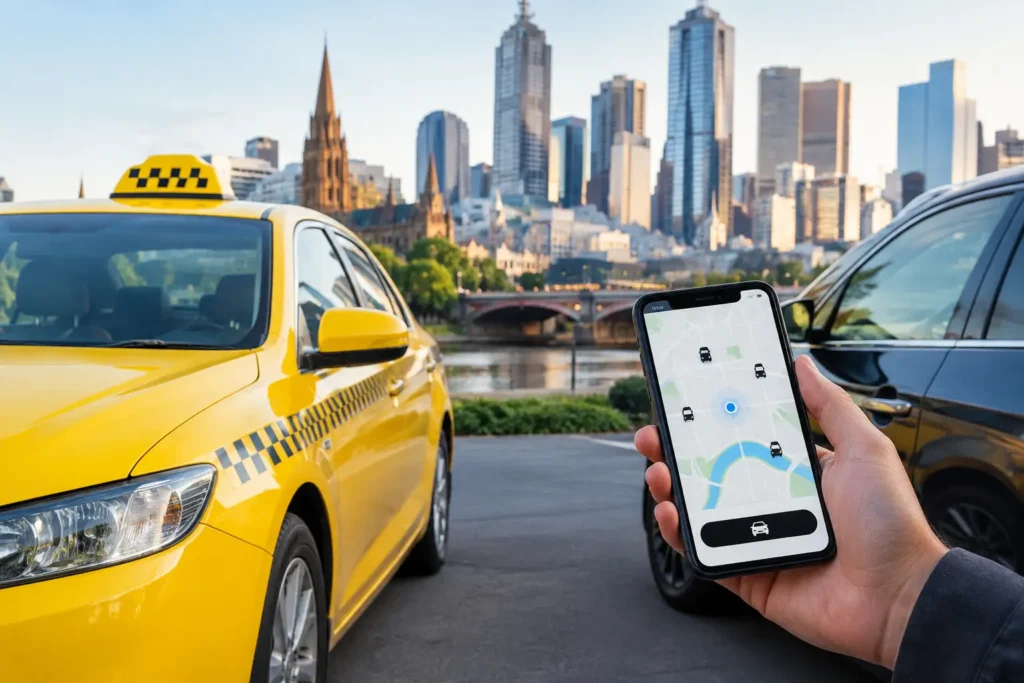
A late flight, a packed Friday night or an early corporate meeting can turn a simple trip into a costly one if you choose transport based on the first price you see. When comparing taxi versus rideshare costs, the cheapest-looking option is not always the best value once waiting time, surge pricing, tolls, vehicle size and the certainty of getting a ride are considered.
For Melbourne passengers, the right choice depends on where you are travelling, when you need to leave and how much reliability matters. A pre-booked taxi can offer a clear, professional arrangement for an airport run or business appointment, while rideshare may suit a quiet, short trip when demand is low. Understanding the differences helps you book with confidence rather than taking a gamble at the kerb.
Taxi versus rideshare costs: what changes the final fare?
Neither taxis nor rideshares have one fixed price for every trip. Both are affected by distance, travel time, traffic conditions and any applicable tolls. The major difference is how the price is calculated and when it can change.
A taxi fare is generally metered, with charges based on the distance travelled and time spent in the vehicle. This makes the price responsive to the actual journey. Heavy traffic may increase the fare because the trip takes longer, but the fare structure is not designed to jump dramatically simply because a concert has finished or rain has started falling.
Rideshare services commonly show an upfront estimate in their app. That can be useful when you want to compare options before booking. However, the quoted fare is often driven by current demand. During peak periods, dynamic pricing can raise the cost quickly, sometimes before you have had time to consider another option.
For either service, check whether the displayed or quoted price includes tolls, airport access charges, booking fees, extra stops and any vehicle upgrade. A standard sedan may appear cheaper than a larger vehicle, but it is not a practical comparison if you are travelling with five people and airport luggage.
The real cost of surge pricing
Surge pricing is one of the biggest variables in rideshare costs. It occurs when demand for vehicles is high and the number of available drivers is limited. In Melbourne, this is common after major sporting events, during wet weather, around public holidays, on Friday and Saturday evenings, and when large crowds leave the airport or entertainment precincts.
The inconvenience is not only the higher price. You may see a fare that changes each time you refresh the app, or a driver may be allocated from further away than expected. If you have a flight to catch, a dinner reservation or a client waiting, delaying your booking in the hope that surge drops can create more pressure than it saves.
Taxis do not operate on rideshare-style surge multipliers. The metered fare may still reflect the time taken in congested traffic and relevant regulated charges, but passengers are not exposed to a demand multiplier that can sharply inflate a fare at short notice. For travellers who value consistency, especially at busy times, that difference can matter more than a small saving on a quiet afternoon.
Airport transfers need a fuller comparison
Melbourne Airport trips are rarely just about the kilometre rate. They are often time-sensitive, involve luggage and may take place at hours when public transport is less convenient. Airport access fees, toll roads, waiting time and the location of your pickup can all affect the final amount.
For an airport transfer, a pre-booked taxi gives you the benefit of arranging a pickup time around your flight schedule. This is particularly useful for early departures from suburbs such as Brighton, Hawthorn, Berwick or Werribee, where a late driver cancellation or long wait can have serious consequences. You can also request the vehicle type that suits your group and luggage instead of hoping a suitable car is available when you open an app.
Rideshare can be competitive for airport travel when demand is normal and drivers are nearby. The app estimate provides a useful reference point, particularly for solo passengers with minimal luggage. Yet prices can rise during peak arrival and departure periods, while the final pickup location may require a walk to a designated area. For families, executives and travellers carrying several bags, convenience and vehicle suitability should be included in the value calculation.
When a taxi is likely to offer better value
A taxi is often the stronger option when timing is non-negotiable. This includes airport departures, medical appointments, corporate travel, long-distance journeys and pre-arranged pickups for guests. The ability to book ahead means your transport is organised before the busiest part of the day begins.
It can also be better value when demand is high. A rideshare fare may be reasonable at 4 pm and substantially higher at 6 pm after a major event. A taxi provides an alternative that is not dependent on fluctuating app demand. For passengers travelling from locations with fewer nearby rideshare drivers, a taxi booking can also reduce the risk of extended waiting or driver cancellations.
Larger groups should compare the total fare, not the per-person price shown on a screen. A maxi cab, wagon or SUV can keep a family, work group or group of friends together, with room for luggage. Booking two smaller rideshare vehicles may look convenient, but it can cost more, split the group and complicate arrival times.
There is also value in knowing who is responsible for the journey. A professional taxi service provides direct booking support, a confirmed pickup arrangement and a transport provider you can contact if plans change. For corporate travellers, that accountability is often worth more than chasing a marginally lower app fare.
When rideshare may cost less
Rideshare can be a sensible lower-cost option for short, flexible trips outside peak demand. If you are travelling alone in the middle of the day, have time to wait and the quoted fare is clearly below the expected taxi fare, it may be the right choice.
It can also work well where the trip is straightforward and there is no need for a specific vehicle, advance booking or extra assistance. The fare estimate lets you make a quick decision before confirming, which some passengers prefer for everyday local travel.
The key is to treat the initial fare as a live price, not a standing promise for later in the day. If you expect to travel after an event, in poor weather or at a high-demand time, check the app closer to departure and compare it with a taxi booking. A cheaper fare at lunchtime says very little about what transport will cost at 11 pm.
Price is only one part of the decision
A fair transport comparison includes the cost of delays and uncertainty. Missing a flight, arriving late to a client meeting or waiting outside with children in the rain can outweigh a few dollars saved on the ride itself. This is why business travellers and families often choose pre-booked transport even when another option appears slightly cheaper at first glance.
Consider your full trip requirements: the pickup time, the number of passengers, luggage space, destination, expected traffic and whether you need a receipt or account-based travel record. If you are travelling to regional Victoria, the driver’s willingness and ability to complete a longer journey is also relevant. A service designed for pre-arranged long-distance travel can be more dependable than trying to secure a driver at the last minute.
For urgent parcel or medical-item transport, the comparison changes again. Rideshare passenger pricing does not necessarily reflect the care, timing and direct handling required for time-sensitive deliveries. A dedicated taxi and transport provider can arrange the vehicle and service around the item being moved, rather than treating it as an afterthought.
How to compare your trip before booking
Start by checking the journey details, not just the headline fare. Compare the pickup time, estimated arrival, vehicle type and whether tolls or airport charges are included. If the trip is important, ask for a taxi quote or arrange a pre-booked service early, then check the rideshare price at the same time.
For a taxi journey, confirm the pickup address, destination, passenger numbers and luggage requirements. Mention any flight time, child seat requirement or larger vehicle need when booking. This gives the operator the information needed to send an appropriate vehicle and plan the job properly.
For rideshare, review the vehicle category carefully and allow for the possibility that prices or driver availability may change. Do not assume the lowest app option will comfortably fit people, prams, suitcases or equipment.
Melbourne Silver Taxi Cab is suited to travellers who want a dependable pre-booked option for airport, corporate, local and regional trips, with vehicle choices matched to the journey. The best transport decision is the one that gets you there comfortably, on time and without an unwelcome fare surprise.